
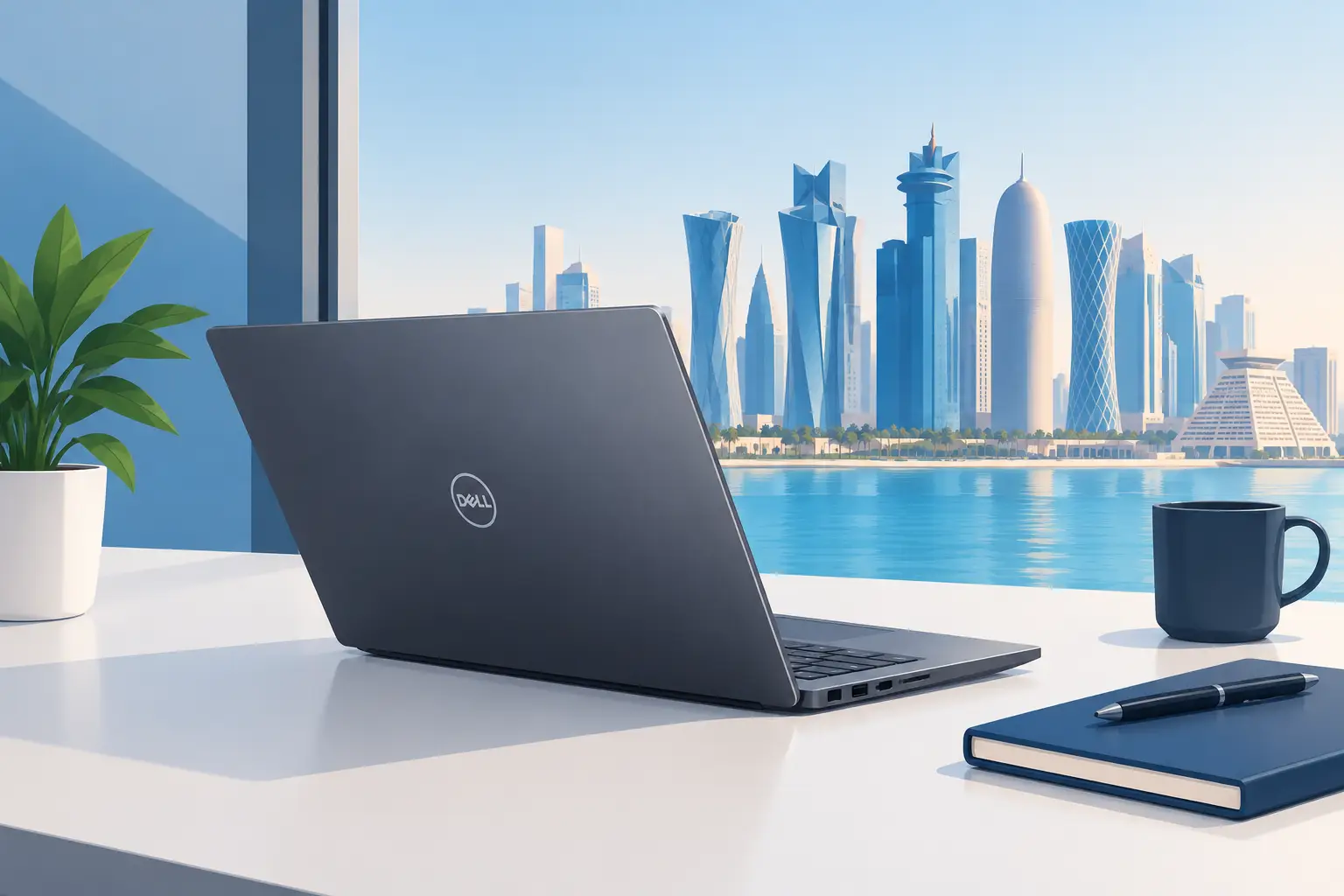

A Dell Latitude is rarely bought as a one-off business expense. For most organisations, it is a productivity decision that affects employee mobility, data protection, helpdesk workload and replacement planning. That is why the Dell Latitude laptop price Qatar search should begin with the role each user performs, not simply the lowest advertised figure.
Latitude is Dell’s commercial laptop family, designed for managed business environments rather than occasional home use. Pricing varies meaningfully between entry-level systems for administration teams and higher-specification models for managers, field staff and technical users. A correct quotation should account for the device specification, operating system, warranty level, deployment requirements and the number of units required.
What shapes Dell Latitude laptop price in Qatar?
The most visible price difference is usually the processor generation and performance tier. A system built around an efficient Intel Core i5 processor, suitable memory and SSD storage will meet the needs of many office-based users. However, teams working with large spreadsheets, multiple browser applications, business intelligence dashboards or virtual meetings throughout the day may need additional memory, a faster processor or larger storage capacity. These choices raise the initial purchase cost, but can prevent premature replacement and lost working time.
Screen size also matters. A compact 13-inch Latitude can suit executives and sales teams who travel frequently between client sites, meetings and branches. A 14-inch model is often the practical standard for a corporate fleet because it balances portability with everyday working space. Larger 15-inch configurations may be more appropriate where staff work extensively with documents, reports or several on-screen applications without an external monitor.
The price will also reflect security and manageability features. Business buyers may require TPM-based security, biometric sign-in, a privacy shutter, smart card support, docking compatibility or enhanced remote management. Not every employee needs every feature. Matching these capabilities to job roles helps procurement teams control cost while maintaining the standards required by company policy.
Buy for the user role, not the product label
A single laptop specification across the entire organisation appears simple, but it can create unnecessary expense. Giving every employee the highest available specification wastes budget; selecting the lowest specification for all users can reduce productivity and increase support calls. A role-based approach is normally more effective.
For administration, reception, basic finance and general office work, an entry or mid-range Latitude with a current-generation processor, 8GB or 16GB of memory and SSD storage may be appropriate. The deciding factor is the business software used each day. Where browsers have many open tabs, cloud applications run continuously or Microsoft Teams calls are frequent, 16GB of memory is often the more sensible long-term choice.
For managers, consultants and mobile professionals, battery performance, weight, display quality, webcam capability and docking options deserve more attention. A laptop that starts quickly, handles video calls clearly and connects reliably to office displays can have a direct effect on the quality of client and internal meetings.
For power users, analysts and specialist departments, the decision may extend beyond a standard Latitude configuration. Larger memory capacity, advanced processors or a Dell Precision mobile workstation could be more appropriate, depending on the applications involved. Paying for a Latitude that is underpowered for demanding workloads is not a saving. Equally, buying a workstation for ordinary email and document work is difficult to justify.
Look beyond the unit price
The laptop price is only one part of the cost of putting a device into service. Corporate procurement should consider the cost of configuration, delivery, user setup, accessories, warranty cover and future support. A lower upfront price can become expensive if internal IT teams need to spend hours preparing each unit manually or dealing with avoidable compatibility issues.
Docking stations, monitors, laptop bags and replacement chargers should be included in the quotation where relevant. A standardised desk setup can improve user comfort and make hot-desking easier, but accessories must be compatible with the selected Latitude model. For organisations rolling out a new fleet, planning these items at the start is more efficient than buying them separately later.
Operating system edition is another important detail. Windows Pro is commonly preferred in business environments because it supports domain connectivity, enhanced device management and business security policies. Confirming the operating system, keyboard layout and storage configuration before ordering avoids surprises at deployment.
Warranty has operational value as well. Official manufacturer warranty provides confidence that the device is genuine and eligible for the correct support route. The right warranty arrangement depends on the device’s role. A laptop used by a travelling director or a frontline operational team may need a faster support response than a device kept as a spare in the office.
Why corporate and bulk pricing needs a tailored quotation
A public retail price is not always useful for a business order. Availability changes, Dell updates configurations, and organisations may need a specific mix of models rather than one standard product. Corporate and bulk pricing is therefore usually assessed against quantity, required specification, warranty, accessories and delivery schedule.
A tailored quotation also creates the opportunity to standardise. When departments use the same or closely related Latitude models, IT teams can simplify driver management, docking compatibility, spare device planning and user support. Standardisation is particularly valuable for organisations with multiple locations or planned headcount growth.
For a small team, the priority may be immediate availability and a practical configuration that will remain capable for several years. For a larger enterprise or government organisation, the priority may be phased delivery, asset identification, pre-deployment configuration and support coverage. Neither approach is automatically better. The right approach depends on the procurement timeline, internal IT capacity and the cost of downtime.
Check stock, authenticity and delivery arrangements
When a new project, office opening or replacement cycle is underway, a delayed laptop shipment can affect more than a single employee. It can hold up onboarding, project mobilisation and site readiness. Before committing to a model, ask whether the exact configuration is available locally or subject to lead time.
Local stock availability in Doha can shorten delivery times across Qatar, particularly when a business needs a defined number of matching devices. However, stock should be confirmed against the precise processor, memory, storage, display and warranty combination in the quotation. Two laptops with the same Latitude family name can have very different specifications and prices.
Genuine products with official manufacturer warranty should be non-negotiable for business procurement. This protects the organisation from uncertain warranty status and gives IT managers clarity when support is required. It is also worth confirming whether the supplier can assist with installation, data transfer, device configuration and ongoing maintenance rather than treating the order as a simple box delivery.
Plan the laptop fleet around the wider IT environment
A Latitude fleet performs best when it fits the organisation’s wider technology plan. Devices should work properly with existing monitors, USB-C docks, Wi-Fi infrastructure, VPN access, endpoint protection and backup policies. If employees use cloud platforms or remote desktops, the laptop specification should reflect those workloads and network conditions.
This is where an experienced local technology partner adds value. Delta Business Systems W.L.L. can help organisations compare Latitude configurations against operational requirements, local stock and competitive corporate pricing, while also considering deployment, warranty support and future expansion. Procurement teams can request an initial product consultation at business@dbsqatar.com before finalising a fleet specification.
For organisations replacing older laptops, it is sensible to review the full lifecycle. Establish which devices can be redeployed, which should be retained as approved spares and which need secure disposal under company policy. A planned refresh reduces the risk of a sudden wave of failures and keeps spending more predictable.
The best Dell Latitude purchase is the one that gives each employee the capability they need, protects the organisation’s budget and remains supportable throughout its working life. For a quotation based on your required models, quantities and delivery schedule, email business@dbsqatar.com or call +974 3139 3916 to speak with a Qatar business IT specialist.


Permalink