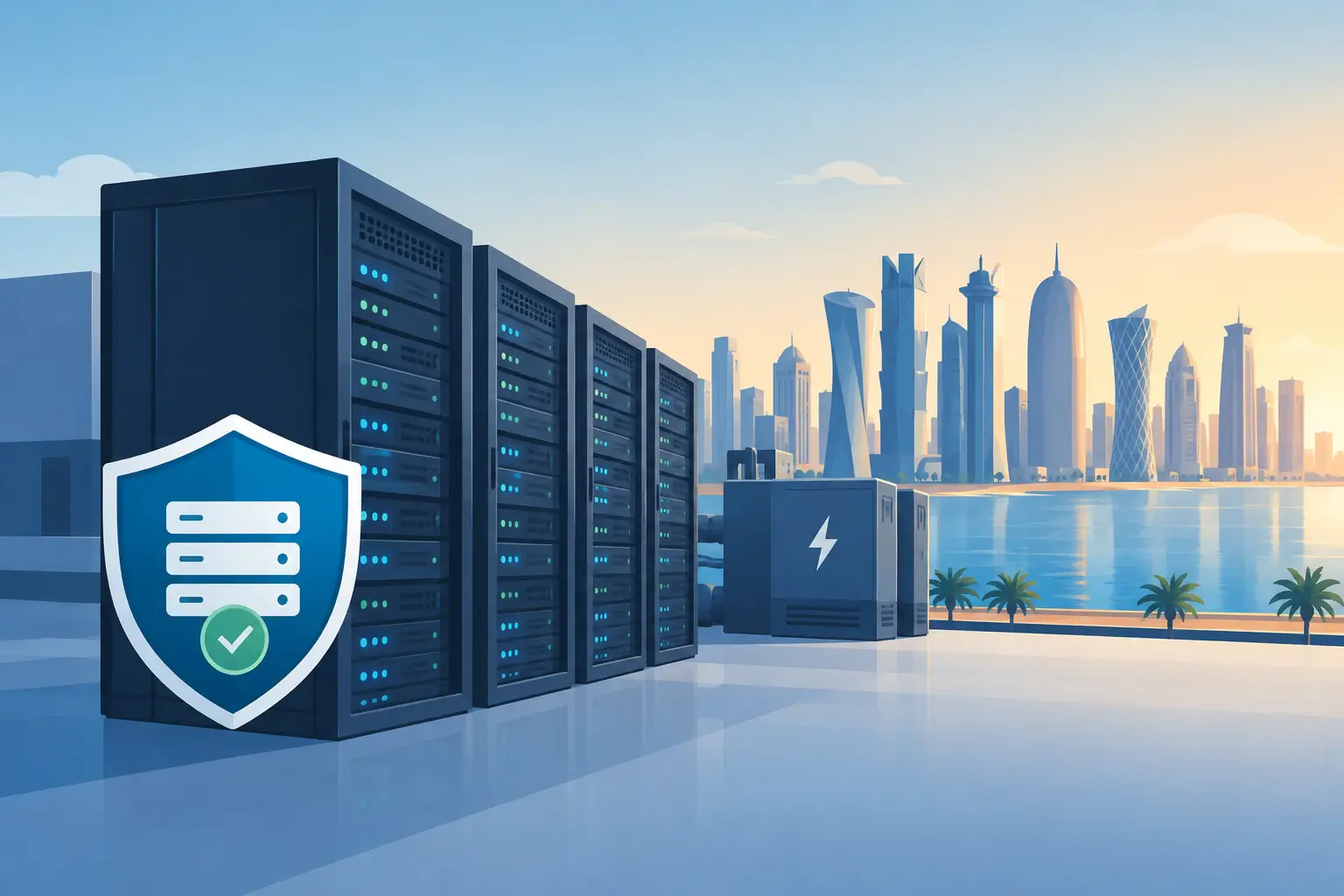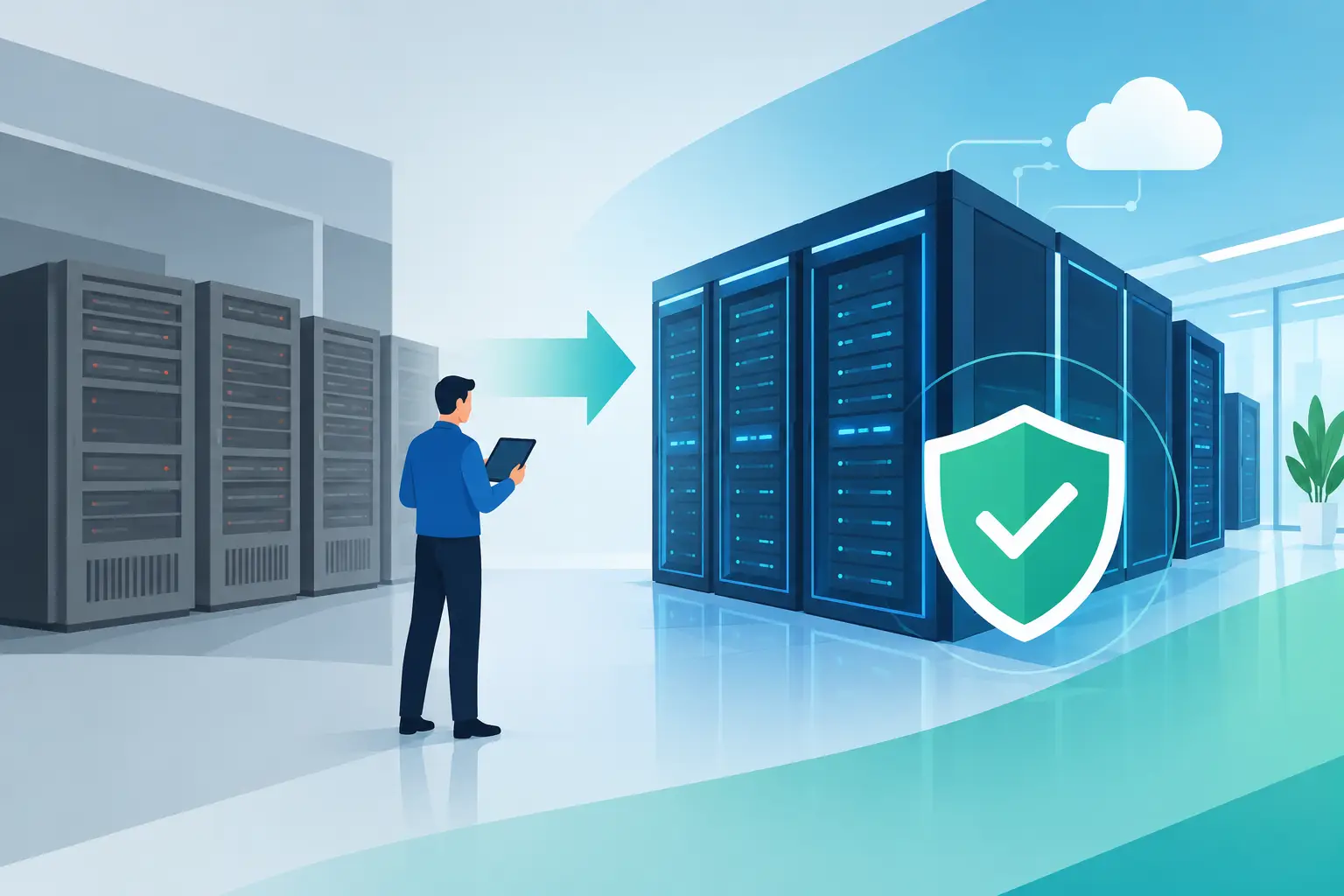

A server room rarely fails because of one dramatic event. More often, performance declines through small compromises: ageing servers, storage that cannot keep pace, untested backups, limited power protection and equipment added without a clear capacity plan. Data centre modernisation services address these risks before they interrupt operations, helping organisations replace uncertainty with a secure, scalable and supportable foundation for growth.
For businesses and government organisations across Qatar, modernisation is not simply a hardware refresh. It is a business continuity decision. The objective is to keep critical applications available, protect valuable data, control operating costs and ensure IT can respond when workloads, users or compliance requirements change.
Why legacy infrastructure becomes a business risk
Many organisations continue using infrastructure beyond its intended lifecycle because it still appears to work. Yet older servers can become harder to support, consume more power per workload and introduce a growing risk of component failure. Storage performance may slow down business applications, while limited capacity can encourage teams to postpone backups or retain data in unsuitable locations.
The effect is often felt outside the IT department. Staff wait longer for systems to respond, finance teams face unplanned replacement costs, and management has less confidence in recovery after an outage. In sectors where service availability and data protection are central to daily operations, even a short interruption can affect reputation, revenue and customer trust.
Modernisation should therefore start with business priorities, not a catalogue of equipment. A growing organisation may need additional virtualisation capacity. A branch network may require centralised backup. A data-intensive team may need faster storage. Another organisation may be primarily concerned with keeping critical systems online through utility disturbances. The right solution depends on the workload, recovery objectives, budget and expected growth.
What data centre modernisation services should cover
An effective modernisation programme brings infrastructure, power, protection and ongoing support into one practical plan. It begins by reviewing the current environment: servers, storage, networking, backup processes, physical space, cooling, power distribution and operational dependencies. This establishes where the immediate vulnerabilities are and which investments will deliver the greatest operational value.
Compute and storage designed for future demand
Modern server platforms give organisations more processing capacity in a smaller footprint, making them well suited to virtual machines, databases, line-of-business applications and private cloud workloads. Dell PowerEdge servers can be configured around the organisation’s required processor performance, memory, storage connectivity and resilience needs, rather than forcing a standard configuration into every environment.
Storage selection deserves the same care. Capacity alone is not enough. The business must consider application speed, data growth, backup windows, recovery requirements and the need to retain information securely. Dell storage solutions can support scalable designs that avoid the costly cycle of replacing the entire platform whenever data requirements expand.
For smaller environments, a carefully sized server and backup approach may be sufficient. For larger or more regulated organisations, redundancy, workload separation and higher availability may be essential. This is where a tailored design makes the difference between buying equipment and building dependable infrastructure.
Power protection as part of the design
Power is often treated as a separate facilities concern, but it directly determines whether IT infrastructure remains available. Voltage fluctuations, brief interruptions and longer outages can damage equipment, corrupt data and cause systems to shut down unexpectedly. A UPS should be sized according to the real load, required runtime, future expansion and the criticality of connected equipment.
Eaton UPS systems provide power protection for server rooms, data centres and business-critical office systems. The most suitable model depends on whether the requirement is basic controlled shutdown, continuous protection for a core server environment, or an architecture with extended battery runtime and managed power distribution. Oversizing may add unnecessary cost, while undersizing can leave vital systems exposed. A site assessment helps make the decision based on evidence rather than assumptions.
Backup and recovery that can be proven
A backup that has never been tested is not a recovery strategy. Modernisation should review how often information is backed up, where copies are kept, how quickly systems can be restored and who is accountable when an incident occurs. Recovery targets should reflect the operational impact of downtime, not just the technical preference of the IT team.
This may mean improving backup capacity, separating backup data from production systems, strengthening retention policies or introducing more reliable recovery procedures. The aim is simple: when a user deletes critical data, hardware fails or a security incident disrupts services, the organisation knows what can be restored and how long it will take.
A phased approach reduces disruption
Replacing every component at once is not always the best route. A phased programme can protect the most exposed systems first while allowing the organisation to plan future investment. For example, a business may begin by replacing unsupported servers and installing suitable Eaton power protection, then move to storage consolidation and backup improvements once the core environment is stable.
The sequence should be guided by risk and dependency. Infrastructure that supports finance, customer-facing platforms, security systems or core operations normally requires priority. It is also sensible to schedule implementation around trading cycles, reporting periods and other times when downtime would have the greatest impact.
Migration planning is equally important. New hardware only delivers value when workloads, data and configurations are moved carefully. This includes compatibility checks, backup verification, cutover planning, testing and a clear rollback procedure. The goal is to minimise downtime while ensuring the new environment performs as expected from day one.
Choosing the right level of resilience
Not every organisation needs the same architecture. High availability, duplicate hardware and extended runtime can be essential for one environment but excessive for another. The right level of resilience depends on the cost of an outage and the practical ability to work around it.
A design conversation should consider questions such as: Which applications cannot be unavailable? How much data loss is acceptable? How quickly must systems return? What growth is expected over the next three to five years? Are there space, power or cooling limitations in the current server room?
These questions turn technical choices into commercial decisions. They also help procurement teams compare proposals properly. The lowest initial purchase price may not represent the lowest risk or the best value if it creates a short lifecycle, lacks warranty coverage or leaves no room for expansion.
Local delivery and support matter after installation
Technology investment does not end when equipment is delivered. Organisations need confidence that systems are genuine, correctly configured and supported throughout their lifecycle. Delta Business Systems provides businesses in Qatar with Dell servers and storage, Eaton UPS solutions, installation, configuration, warranty support, IT Annual Maintenance Contracts and 24/7 technical support.
Local stock availability in Doha can shorten replacement and deployment timelines, particularly where an urgent infrastructure need cannot wait for lengthy international sourcing. DBS supplies genuine products with official manufacturer warranty and can provide competitive corporate and bulk pricing on request. Fast delivery across Qatar and accountable local support give IT teams a practical route from assessment to operational infrastructure.
When planning data centre modernisation services, avoid treating the project as a one-off equipment purchase. Build a roadmap that reflects the systems your organisation relies on, the risks it must manage and the capacity it will require next. To discuss a tailored server, storage, backup or Eaton power protection solution, request a quotation by emailing business@dbsqatar.com or calling +974 3139 3916. A well-planned modernisation programme gives your organisation more than new technology: it gives your people the confidence to operate, recover and grow without infrastructure holding them back.