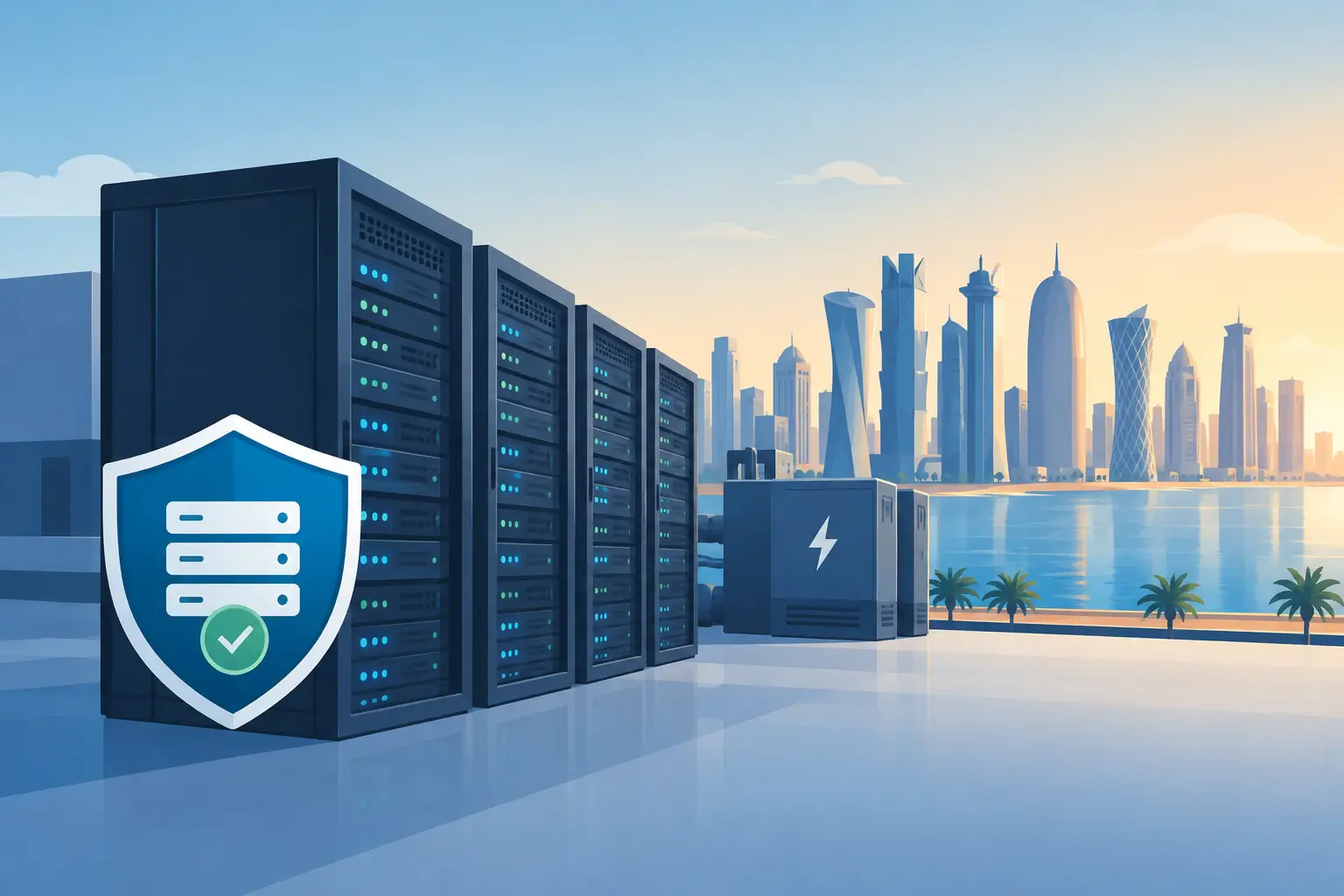

A failed server, an expired security licence or an unstable network can stop far more than an IT department. It can delay customer service, interrupt operations, expose business data and put revenue at risk. Effective IT solutions give organisations in Qatar the dependable foundation to keep working, responding and growing – even when technology demands change quickly.
For business leaders, the right decision is rarely about buying a single device or subscribing to another platform. It is about creating a technology environment that supports daily performance while protecting the organisation against disruption. That requires clear planning, proven products, disciplined implementation and responsive support after deployment.
What Business-Ready IT Solutions Should Deliver
Technology investment should produce measurable operational value. A modern IT environment must help employees access the systems they need, keep critical information available, protect against cyber threats and provide leaders with confidence that the business can continue operating during an incident.
The exact mix will vary by organisation. A growing professional-services firm may prioritise secure remote access and cloud collaboration. A healthcare, retail or logistics operation may require reliable on-site infrastructure, continuous connectivity and carefully controlled access to sensitive systems. Larger enterprises may need integrated data centre, network, security and facility-management technologies operating under common standards.
In each case, the objective remains consistent: minimise downtime, maximise productivity and make future change easier to manage. A solution that works well only on installation day is not a long-term solution. It must be maintainable, scalable and supported by people who understand its role in the organisation.
Start With Business Risk, Not Product Specifications
Procurement discussions often begin with specifications: processor speed, storage capacity, licence type or port count. These details matter, but they should follow a practical assessment of business requirements. The first questions should be more direct. Which systems cannot be unavailable? What data would cause serious disruption if it were lost? How long can each department work without connectivity? Who needs access to which resources, and from where?
This approach helps avoid two common mistakes. The first is underinvesting in core infrastructure because the risk is not immediately visible. The second is overspending on capability that does not match the organisation’s operating model. A smaller business does not always need the same architecture as a large enterprise, but it still needs appropriate security, backup, monitoring and recovery planning.
A well-designed technology roadmap separates immediate priorities from planned improvements. It may address a pressing security gap or ageing hardware first, then phase in cloud services, stronger backup controls, communications upgrades or automation as budgets and business needs evolve. This gives decision-makers control without losing sight of the wider strategy.
Build the Foundation: Infrastructure, Network and Power
Every business application depends on the environment beneath it. Servers, storage, network switches, wireless access points, firewalls and power protection all influence availability. When these components are selected or configured in isolation, performance problems can travel across the entire organisation.
Reliable infrastructure begins with capacity planning. Storage should account not only for today’s data volumes but also for retention requirements, backup copies and anticipated growth. Network design should consider the number of users, cloud applications, guest access, branch connectivity and bandwidth-heavy services such as voice, video or surveillance. Power protection is equally essential, particularly for critical equipment that cannot be exposed to abrupt shutdowns or unstable supply.
There is no single correct choice between on-premises infrastructure, cloud services or a hybrid model. Cloud platforms can provide flexibility and reduce the burden of maintaining some physical equipment. On-premises systems can offer greater control, predictable performance and suitability for workloads with particular security or latency requirements. Hybrid designs often suit organisations that need both local resilience and cloud-based scalability.
The key is to assess applications individually rather than treating cloud adoption as an all-or-nothing decision. Legacy systems, regulatory requirements, data sensitivity and connectivity quality should all shape the architecture.
Treat Cybersecurity as an Operating Discipline
Cybersecurity is not a product category that can be completed with a single purchase. Firewalls, endpoint protection, email security, identity controls and backup systems are essential, but their effectiveness depends on configuration, monitoring, patching and user behaviour.
A credible security posture starts with visibility. Organisations need to know what devices connect to the network, which accounts have privileged access, where sensitive data is stored and whether systems are receiving critical updates. From there, layered protection can reduce the impact of phishing, malware, unauthorised access and data loss.
Backup is especially important because it supports both operational resilience and recovery from cyber incidents. A backup that has not been tested may not be a backup when it is needed most. Businesses should define recovery priorities, retain protected copies of critical data and test whether systems can be restored within an acceptable timeframe.
Security also requires proportionate controls. Excessively complex access procedures may encourage users to find unsafe workarounds, while weak controls create unnecessary exposure. The best approach balances protection with usability, giving employees secure access without slowing essential work.
Why Ongoing Support Changes the Value of IT Solutions
Technology projects are often judged by installation milestones. For the business, however, the real test begins after handover. Systems need updates, warranties need managing, users need assistance and faults need resolving before they become extended outages.
An IT Annual Maintenance Contract can provide structure around these responsibilities. Depending on the organisation’s needs, it may cover preventative maintenance, monitoring, technical assistance, asset checks, software updates and prioritised response to incidents. This makes costs more predictable and reduces the pressure on internal teams that are already managing daily business demands.
The right support model depends on the criticality of the environment. A small office may need dependable remote assistance and scheduled site visits. A business operating around the clock may require 24/7 technical support, clear escalation paths and service commitments aligned with its operational risk. In either case, support should not be treated as an optional add-on after a project budget has been approved.
Local capability matters here. A provider with experience in Qatar can coordinate on-site work, understand practical deployment conditions and respond with greater accountability when an issue affects business operations. Delta Business Systems combines technology procurement, solution design, deployment and managed support to give organisations one accountable partner across the technology lifecycle.
Choose Integration Over a Collection of Tools
Many organisations accumulate technology over time: a separate supplier for networking, another for security, a cloud subscription purchased by one department and backup software managed by another. Each individual decision may be reasonable, but the combined environment can become difficult to support, secure and control.
Integrated IT solutions do not mean using only one brand or replacing every existing system. They mean designing technologies to work together with clear ownership, compatible configurations and documented processes. For example, identity management should support secure cloud access, network segmentation should reinforce security policies, and backup planning should reflect the applications hosted across both local and cloud environments.
Consolidation can improve visibility and reduce duplicated spending, but it must be handled carefully. Replacing working systems too quickly can create avoidable disruption. A staged approach usually delivers better results: assess the current estate, identify the highest-risk gaps, set standards for future purchases and modernise in manageable phases.
Questions Leaders Should Ask Before Approval
Before committing to a technology project or supplier, decision-makers should look beyond the initial quotation. Four questions can reveal whether the proposal will support the organisation over time:
- What business risk or operational constraint does this solve?
- How will the solution perform as users, data and locations increase?
- Who is responsible for implementation, documentation, maintenance and incident response?
- What happens if a component fails, a cyber incident occurs or connectivity is lost?
Clear answers indicate a solution designed for continuity rather than a short-term transaction. They also help finance, operations and IT teams evaluate the same proposal through a shared business lens.
Make Technology a Source of Confidence
The strongest technology environments are rarely the most complicated. They are the ones where employees can work productively, customers receive consistent service and leaders know that critical systems are protected and supported.
A future-ready strategy begins with a realistic view of operational risk and a partner capable of turning that view into practical action. When infrastructure, cybersecurity, cloud services, communications and ongoing maintenance are planned together, technology becomes less of a daily concern and more of a dependable engine for the business ahead.
Request a Quotation from Delta Business Systems
Delta Business Systems is an authorised partner in Doha, Qatar for Dell Technologies, Lenovo and Eaton. We supply Dell PowerEdge servers and storage, Dell Latitude and OptiPlex and Lenovo ThinkPad and ThinkCentre business laptops and desktops, and Eaton UPS power protection – genuine products with official manufacturer warranty, local stock in Doha and fast delivery across Qatar.
For a quotation, corporate or bulk pricing, or a free consultation, email business@dbsqatar.com or call +974 3139 3916. Our team will respond with a tailored proposal for your organisation.