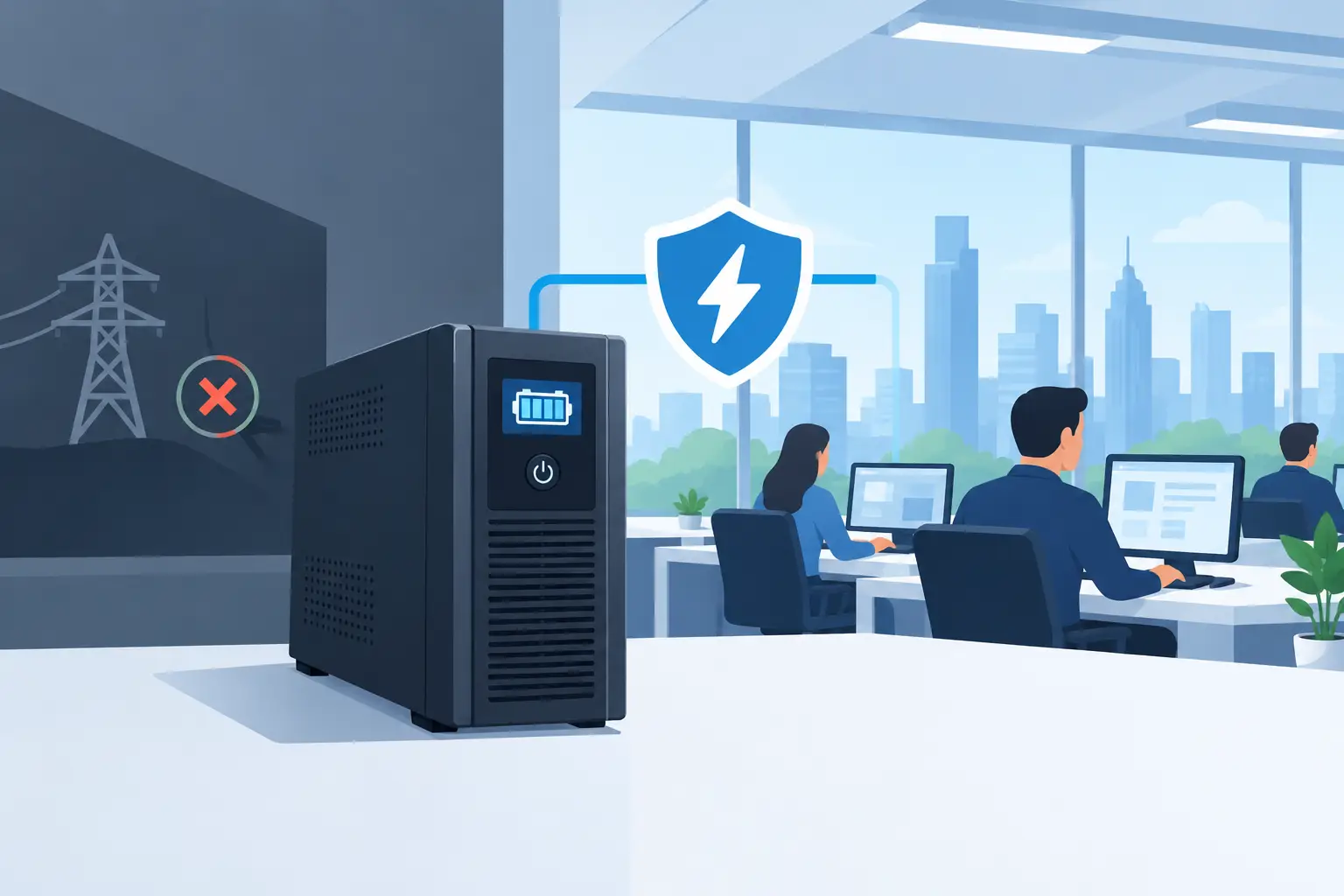

A server room can be running normally at 10:00 and become a recovery exercise at 10:01. A brief interruption to utility power may stop servers, switches, storage, security systems and business-critical applications without warning. Effective UPS power protection gives IT equipment time to ride through a short outage, shut down safely during a longer one, or continue operating until a generator takes over.
For organisations in Qatar, the question is not simply whether a UPS is required. The more useful question is whether the installed UPS has the capacity, topology, battery autonomy and service cover to protect the systems the business genuinely depends on. Getting that decision right protects revenue, data integrity and employee productivity.
Why UPS power protection is a business decision
A UPS is often viewed as a battery box beneath a desk or beside a rack. In reality, it is part of the continuity strategy for the wider IT environment. When power fails unexpectedly, an uncontrolled shutdown can corrupt files, interrupt transactions, damage operating systems and leave network services unavailable long after electricity has returned.
The impact extends beyond the data centre. A failed network switch can disconnect IP phones and wireless access points. A stopped point-of-sale system can delay customer service. A server that shuts down incorrectly may require technical intervention before staff can resume work. For a government department, healthcare provider, school, logistics operation or growing SME, these delays carry operational and reputational cost.
A properly specified UPS provides more than battery backup. Depending on its design, it can regulate inconsistent voltage, filter electrical noise, manage surges and maintain a stable output for sensitive equipment. It also enables controlled shutdown through monitoring software, preserving data when an extended outage exceeds available battery runtime.
Choose the UPS topology for the risk, not the room size
Not every load needs the same level of protection. The right UPS depends on the criticality of the equipment, the quality of the incoming power, the acceptable downtime and the planned growth of the environment.
Standby and line-interactive UPS systems
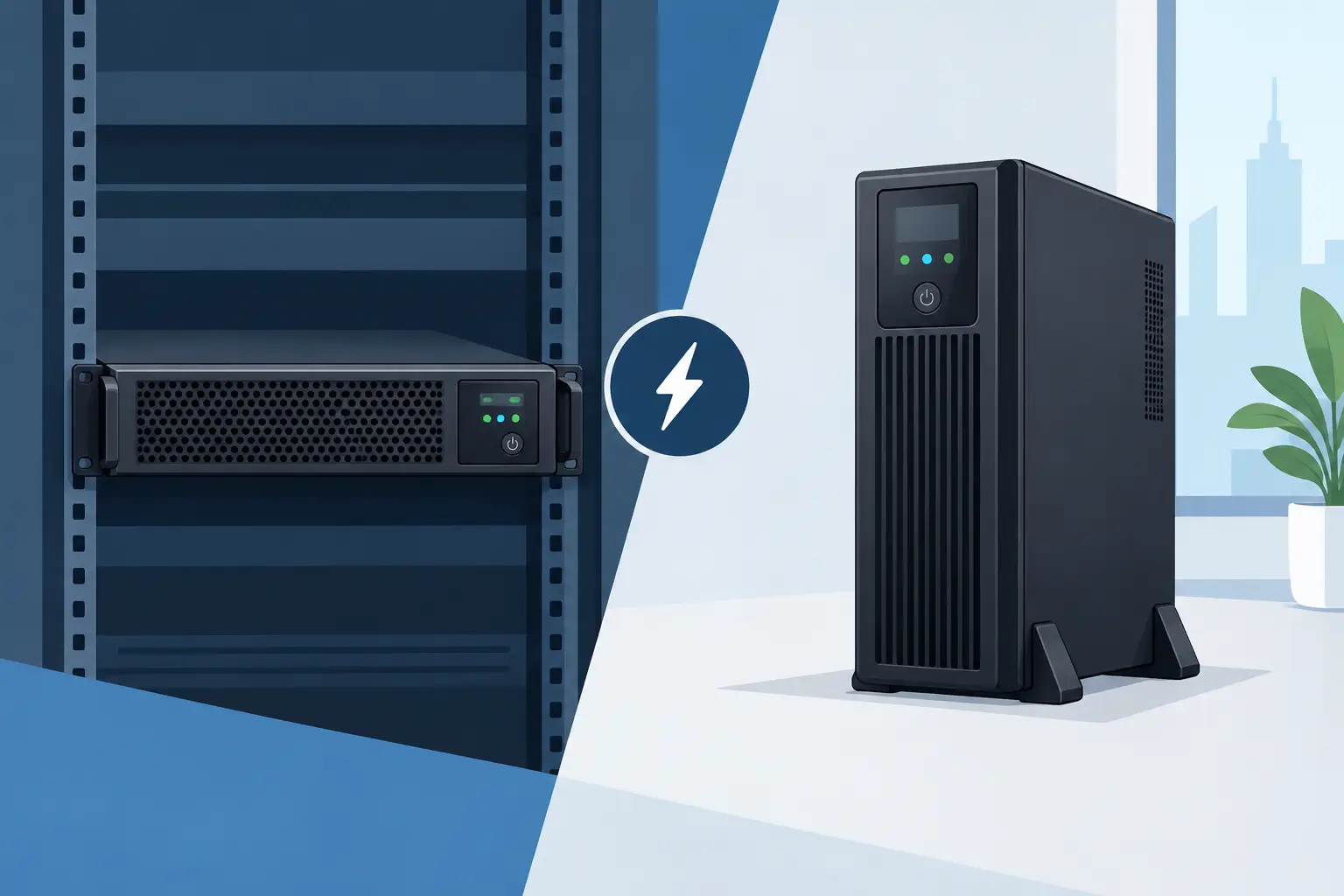
For individual workstations, small network cabinets, CCTV equipment or modest office IT loads, a line-interactive UPS is often a practical choice. These units can correct moderate voltage variation without immediately using battery power, helping to preserve battery life. They offer sensible protection where a short interruption is inconvenient but not mission-critical.
They are not always appropriate for high-value server, storage or network environments. Transfer time, output characteristics and runtime requirements should be reviewed before deploying them for equipment that supports essential services.
Online double-conversion UPS systems
For server rooms, data centres, core networking, storage and other critical loads, online double-conversion UPS technology is usually the stronger option. It continuously converts incoming AC power to DC and then creates clean AC output for connected equipment. Because the load is supplied through the inverter, the system isolates equipment from many utility power disturbances and delivers zero transfer time when an outage occurs.
This architecture is particularly valuable where downtime has a material business consequence. It costs more than an entry-level UPS, but the comparison should be made against the potential cost of application disruption, equipment recovery and lost working hours.
Capacity planning: avoid both undersizing and waste
UPS selection starts with the real electrical load, measured in watts and volt-amperes, not with an estimate based only on the number of devices. Servers, storage arrays, switches, firewalls, monitors and future expansion all need to be considered. The power supply rating printed on a device is not always its actual consumption, so a site assessment or measured load reading produces a more accurate design.
A UPS should not normally be operated at its absolute maximum capacity. Allowing headroom supports reliable performance, accommodates peak demand and leaves room for planned growth. For many environments, designing around 20 to 30 per cent spare capacity is sensible, although the right margin depends on the organisation’s expansion plan and the ability to add modular capacity later.
Runtime is a separate decision. A 10-minute battery backup may be sufficient where an automatic generator starts quickly and reliably. An office without generator support may need enough autonomy to save work and complete an orderly shutdown. A critical application may instead require extended battery cabinets or a generator-backed strategy that can operate for much longer.
It is equally important to define what should remain powered. During a prolonged event, keeping core servers, storage, firewall and network infrastructure online may be more valuable than supporting every peripheral device. Load prioritisation can reduce UPS size and extend useful runtime.
Protect the entire dependency chain
A protected server alone does not guarantee an available service. The dependency chain usually includes storage, network switches, routers, firewalls, wireless controllers and often cooling or building-management components. If any essential element loses power, the application may still be inaccessible.
Map the systems that support each critical business process. For example, an ERP platform may depend on a virtualisation host, shared storage, core switch, firewall, internet connection and authentication service. A UPS design should reflect these dependencies rather than treating each device in isolation.
For larger deployments, redundant UPS configurations may be justified. Parallel systems, maintenance bypass arrangements and separate power feeds can allow servicing or a component failure without interrupting protected loads. These designs require careful engineering, but they provide meaningful resilience for organisations with little tolerance for downtime.
Batteries, monitoring and maintenance determine real-world performance
A UPS is only as dependable as its batteries and maintenance regime. Batteries degrade over time, especially when exposed to high temperatures, frequent discharge cycles or unsuitable operating conditions. A unit may appear healthy during a routine visual check yet deliver far less runtime when it is needed.
Regular inspections should review battery health, alarms, load levels, ventilation, firmware status and recorded events. Scheduled battery replacement is not an optional extra for critical infrastructure. It is a planned investment that prevents the far greater cost of discovering weak batteries during an outage.
Monitoring is equally valuable. Network management cards and UPS software can alert IT teams to power events, battery faults and overloads. They can also trigger an orderly shutdown sequence for servers and storage when remaining runtime reaches a defined threshold. For unmanned locations or distributed offices, remote visibility turns power protection from a passive device into a managed operational control.
Physical conditions matter as well. UPS equipment needs suitable clearance, controlled temperature, clean airflow and accessible cabling. Placing a high-capacity unit in an enclosed, hot area can shorten battery life and undermine the protection the organisation expects.
A practical specification checklist
Before requesting a quotation, establish the equipment to be protected, current measured load, required battery runtime and whether a generator is available. Confirm the expected growth over the next three to five years, the installation space, input and output electrical requirements, and whether monitoring or automatic shutdown is needed.
Also consider serviceability. A low initial purchase price can become expensive if replacement batteries are difficult to source, support is slow, or the system cannot be maintained without taking the load offline. For core infrastructure, manufacturer-backed warranty and qualified local technical support should be part of the decision, not an afterthought.
Local UPS support for Qatar businesses
Delta Business Systems supplies Eaton UPS and power protection solutions for offices, server rooms and data centre environments across Qatar. With more than 30 years of local IT experience, the team can assess the protected load, recommend a suitable architecture and coordinate installation, configuration and ongoing support alongside server, storage and networking requirements.
Genuine products with official manufacturer warranty, local stock availability in Doha and fast delivery across Qatar help organisations respond quickly when their existing power protection is reaching capacity or showing signs of battery failure. Corporate and bulk pricing can be provided where multiple branches, racks or work areas require standardised protection.
For a tailored UPS assessment or quotation, email business@dbsqatar.com or call +974 3139 3916. The right system is the one that gives your business enough time, clean enough power and dependable enough support to keep critical work moving when the mains supply does not.